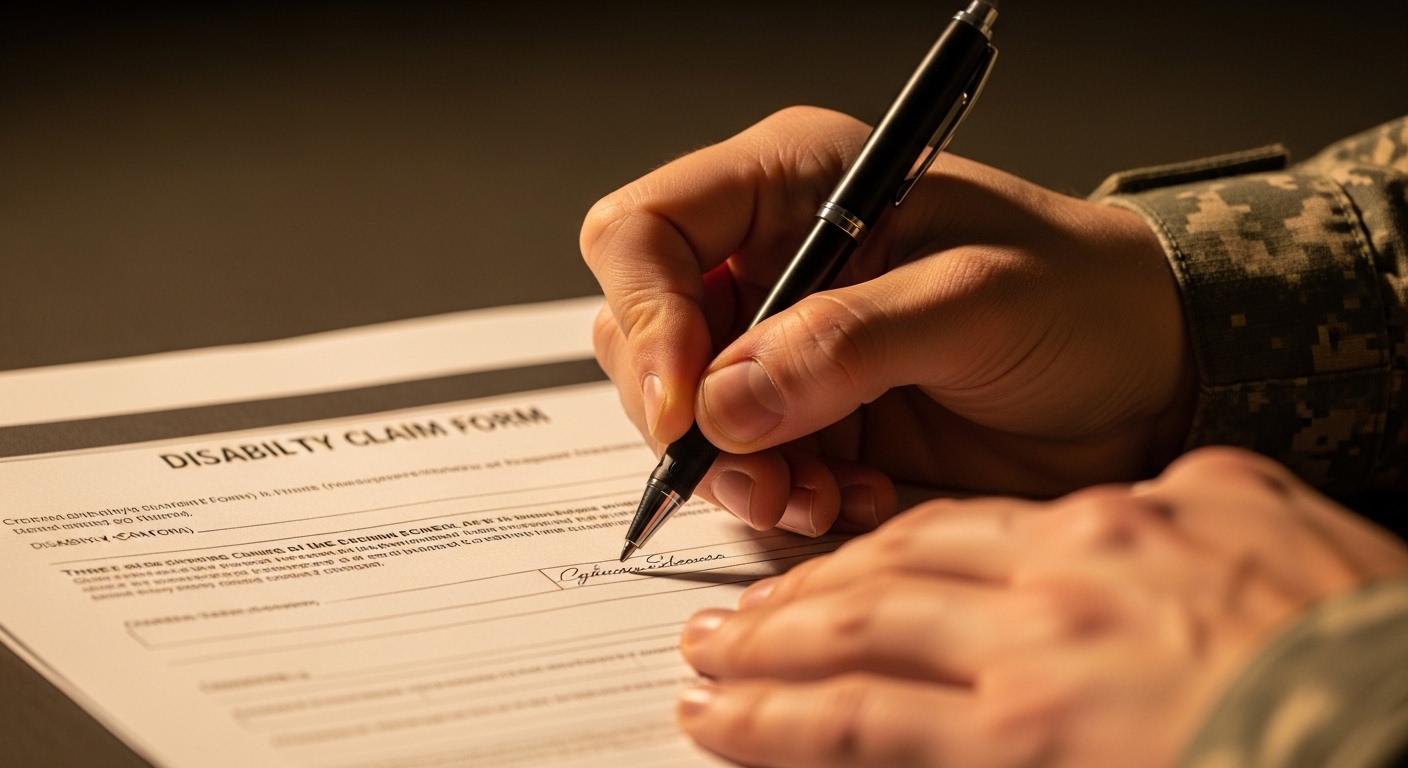
Millions of veterans who have earned disability benefits are either not receiving them or are receiving far less than they deserve. The VA disability claims process is one of the most navigated — and most misunderstood — systems in the United States. This guide breaks it down clearly, step by step, so you know exactly what to do, what to submit, and how to protect your financial future.
What Is VA Disability Compensation?
VA disability compensation is a monthly tax-free payment offered to veterans who got sick or injured while serving in the military, or whose service made an existing condition worse. You may qualify for both physical conditions like chronic illness or injury and mental health conditions like PTSD. Veteran Adviser
VA disability pay rates increased by 2.8% in 2026 following the Social Security Administration’s Cost of Living Adjustment, with new rates taking effect December 1, 2025. American Corporate Partners A veteran with no dependents rated at 100% disability currently receives over $3,800 per month, tax-free.
Step 1: File Your Intent to File (ITF) — Do This First
Before anything else, submit an Intent to File. This is the most overlooked and most important step in the entire process.
Submitting an intent to file sets a potential start date for your benefits. If you notify the VA of your intent to file and they approve your claim, you may be able to receive retroactive payments — payments covering the time between when the VA processed your intent to file and when they approved your claim. Mysite
After submitting your ITF, you have one year to complete and file your full claim. If you are a recently separated veteran and file your ITF before your one-year separation anniversary, you can receive back pay all the way to the day after you separated. VETERANS VALOR
How to submit your ITF:
- Online at VA.gov
- By phone at 800-827-1000
- In person at your nearest VA regional office
Step 2: Gather Your Evidence
The strength of your claim depends entirely on your evidence. When you file a disability claim, the VA reviews all available evidence to determine if you are eligible for benefits. Required documents include service records, any medical evidence related to your illness or injury such as doctors’ reports and medical test results, and lay evidence — written testimony from you or someone who knows about your condition. Veteran Owned Business
The most important documents to gather:
- DD-214 — Your discharge papers proving military service
- Service treatment records — Medical records from your time in service
- Private medical records — Current diagnosis linking your condition to service
- Buddy letters (VA Form 21-10210) — Statements from fellow service members or family members who witnessed your condition
- Nexus letter — A written opinion from a doctor connecting your current condition directly to your military service
A nexus letter is one of the single most powerful tools for winning a claim. Many veterans are denied simply because they lack this direct medical link between their condition and their service.
Step 3: File Your Claim
You can file your claim online, by mail using VA Form 21-526EZ, by bringing your application to a VA regional office, or with the help of an accredited attorney, claims agent, or Veterans Service Organization representative. Veteran Owned Business
Pro tip — File a Fully Developed Claim (FDC). If you opt for the Fully Developed Claim process, you could receive your results within 30 days American Corporate Partners, compared to the standard average processing time of around 85 days. An FDC simply means you submit all your evidence at the same time as your application, rather than letting the VA gather it for you.
If you mail your claim, use certified mail with return receipt requested and keep copies of everything you send. The VA goes by the date the claim is processed at the intake center — not the postmark date. Veteran Owned Business
Step 4: Attend Your C&P Exam
After filing, most veterans are scheduled for a Compensation and Pension (C&P) exam. This is the VA’s medical evaluation to assess the severity of your condition. It heavily influences your rating.
Tips for your C&P exam:
- Describe your condition on your worst day, not your best
- Do not minimize your symptoms — be thorough and honest
- Bring all supporting documentation
- Request a copy of the exam report afterward and review it carefully for errors
Understanding Your Disability Rating
The VA assigns a disability rating based on the severity of your service-connected condition and uses it to determine your monthly disability compensation as well as your eligibility for other VA benefits. If you have multiple disability ratings, they use a combined rating formula rather than simply adding them up. Commitfoundation
The combined rating system works against veterans as they approach 100%. For instance, a veteran with ratings of 50% for PTSD, 50% for sleep apnea, 20% for diabetes, and 20% for a back problem receives a combined rating of 80% — even though the individual ratings add up to 140% in standard math. Milmentor
2026 Monthly Pay Examples (No Dependents):
- 30% rating — $552.47/month
- 50% rating — $1,132.90/month
- 70% rating — $1,716.28/month
- 100% rating — $3,831.30/month
All payments are tax-free. View the full rate table at VA.gov.
How to Maximize Your Rating
1. Claim every condition. Do not limit yourself to your most obvious injury. PTSD, sleep apnea, tinnitus, chronic back pain, and migraines are among the most commonly approved conditions — and are frequently overlooked.
2. File for secondary conditions. If a service-connected condition has caused another condition — for example, chronic pain leading to depression — that secondary condition can also be rated and compensated.
3. Request a rating increase if your condition worsens. You can also file a claim for increased disability compensation if a previously rated condition has gotten worse. Veteran Adviser
4. Work with a VSO or accredited claims agent. Veterans Service Organizations provide free assistance and are proven to help veterans receive higher ratings and faster decisions. Find one at VA.gov.
5. Appeal denied claims. A denial is not the end. You have the right to appeal through three pathways — a Supplemental Claim, a Higher-Level Review, or a Board of Veterans’ Appeals hearing.
Key Takeaways
- File your Intent to File immediately to protect your back pay date
- A Fully Developed Claim with strong medical evidence significantly speeds up your decision
- Claim every service-connected condition, including secondary conditions
- Attend your C&P exam and describe your worst days honestly
- If denied, always appeal — many claims are won on appeal
For official claim filing, visit the VA Disability Benefits page or call 800-827-1000.
The Walker Lifestyle Incorporated helps veterans navigate this process through our Veteran Leadership and Benefits Education Program. Contact us to learn more.