

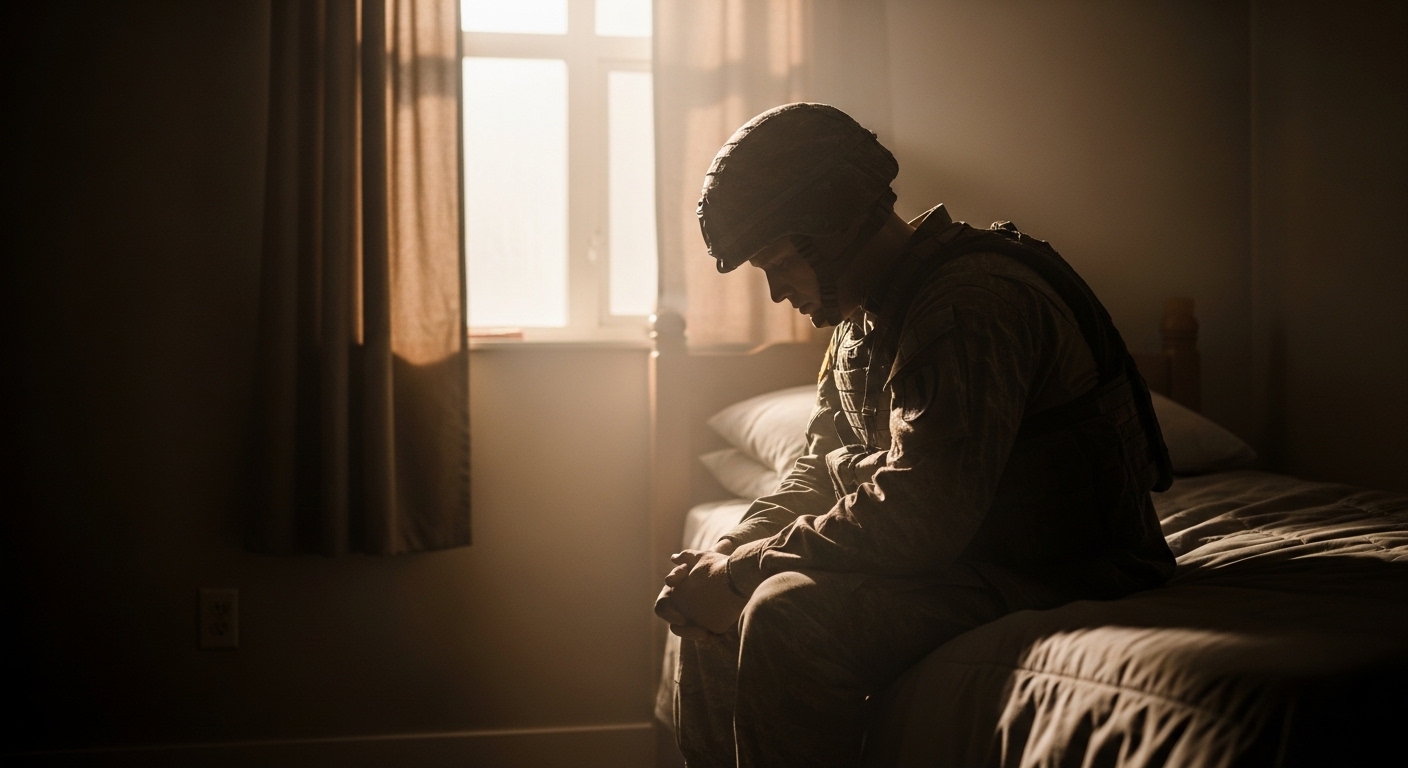
For millions of American veterans, the end of military service does not mean the end of the war. Post-Traumatic Stress Disorder — commonly known as PTSD — is one of the most prevalent, most misunderstood, and most underserved challenges facing the veteran community today. Understanding it is the first step toward healing.
What Is PTSD?
PTSD is a mental health condition that develops after experiencing or witnessing a traumatic or life-threatening event. For veterans, those events often include combat exposure, military sexual trauma, training accidents, and the sustained psychological weight of life-or-death decision-making.
According to the American Psychiatric Association, PTSD presents through four core symptom clusters:
- Re-experiencing — Flashbacks, nightmares, and intrusive memories
- Avoidance — Staying away from people, places, or situations that trigger trauma
- Negative mood and cognition — Persistent guilt, shame, emotional numbness, and detachment
- Hyperarousal — Constant alertness, irritability, sleep problems, and exaggerated startle responses
Symptoms do not always appear immediately. In many veterans, PTSD surfaces months or even years after their service ends.
PTSD by the Numbers
The scale of this crisis among veterans is significant:
- 7% of all veterans will develop PTSD at some point in their lifetime — compared to 6% of the general civilian population. — VA National Center for PTSD
- 29% of post-9/11 veterans who served in Iraq and Afghanistan have experienced PTSD — nearly three times the national veteran average. — National Center for PTSD
- 1 in 5 veterans with PTSD also struggles with a substance use disorder. — Charlie Health, 2024
- Female veterans are twice as likely to develop PTSD (13%) compared to male veterans (6%). — VA National Center for PTSD
- Veterans diagnosed with PTSD face a suicide rate nearly double that of veterans without the condition. — Mission Roll Call, 2025
How PTSD Affects Veterans After Service
PTSD does not stay in the mind — it spills into every area of a veteran’s life.
Employment and Career Veterans with PTSD often struggle to hold steady employment. Hyperarousal makes high-pressure work environments difficult to navigate, while avoidance behaviors can lead to absenteeism and social withdrawal at work.
Relationships and Family Emotional numbness and irritability place enormous strain on marriages and family dynamics. Many veterans with PTSD report feeling disconnected from loved ones — unable to experience joy or closeness the way they once did.
Physical Health PTSD is closely linked to chronic physical conditions including heart disease, diabetes, and chronic pain. Sleep deprivation caused by nightmares and hypervigilance compounds these health risks significantly.
Financial Stability The combination of unemployment, medical costs, and substance use — which many veterans turn to as a coping mechanism — creates a cycle of financial instability that is difficult to break without structured support.
Why Many Veterans Do Not Seek Help
Despite the prevalence of PTSD, a significant number of veterans never receive treatment. The primary barriers include:
- Stigma — The military culture of resilience often makes seeking mental health support feel like a sign of weakness
- Lack of awareness — Many veterans do not recognize their symptoms as PTSD
- Distrust of systems — Negative experiences with VA bureaucracy discourage veterans from engaging with available resources
- Geographic barriers — Veterans in rural areas face limited access to mental health services
According to the VA National Center for PTSD, only about 50% of veterans who need mental health treatment actually seek it.
Why Structured Programs Make the Difference
Clinical therapy alone is not always enough. Veterans thrive with structure — the same discipline, accountability, and community that defined their military service. Programs that combine mental health support with leadership development, peer mentorship, and goal-setting frameworks address PTSD not just clinically but holistically.
At The Walker Lifestyle Incorporated, our Veteran Leadership, Education, and Accountability Program was specifically designed to fill this gap — providing veterans with the structure, mentorship, and accountability systems they need to rebuild stability, purpose, and confidence in civilian life.
Key Takeaways
- PTSD affects millions of veterans and disrupts employment, relationships, physical health, and financial stability
- Post-9/11 veterans face the highest rates, with nearly 1 in 3 affected
- Stigma and systemic barriers prevent many veterans from seeking treatment
- Structured mentorship and leadership programs are critical complements to clinical care
If you or a veteran you know is struggling, visit the VA National Center for PTSD or call the Veterans Crisis Line at 988, then press 1.
Learn how The Walker Lifestyle Incorporated supports veterans through our Veteran Leadership Program.
https://shorturl.fm/2AqBR